Spring fruit tree care
Spring fruit tree care for September to November: protecting bees and blossom, late frosts, feeding, watering, thinning fruit and early pest checks.
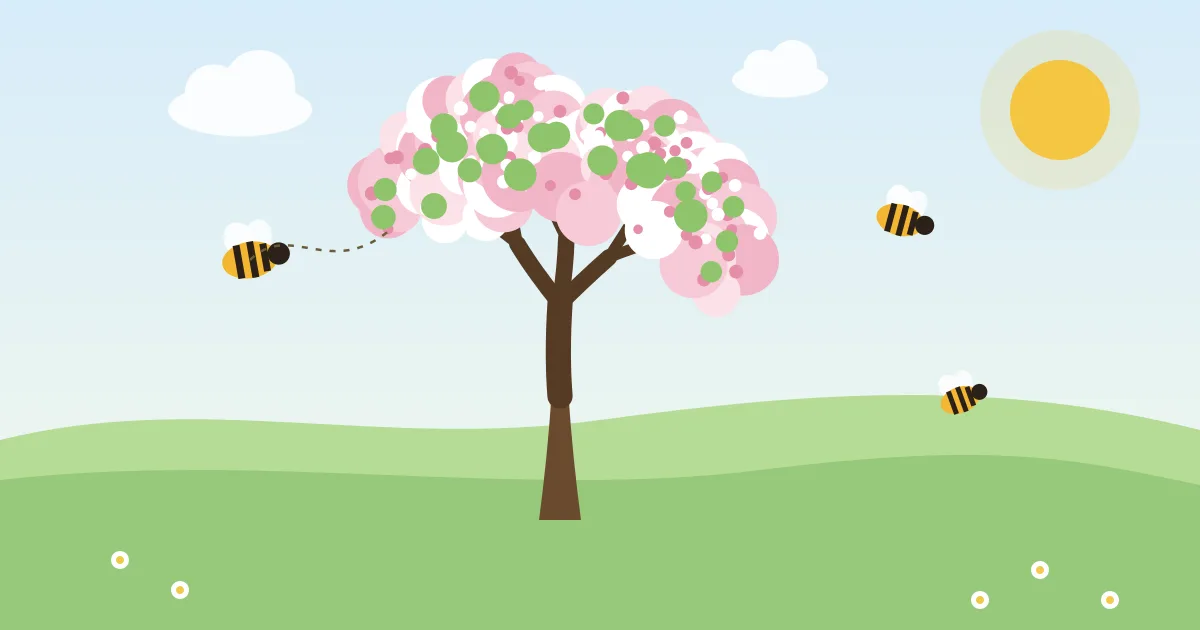
Spring (September to November in southern Australia) is when the year's crop is decided. Flowers open, bees get to work, fruit sets and trees push out a flush of new growth. A little care now pays off all season.
Look after the pollinators
- Don't spray insecticides on open blossom. If you must spray, do it late in the evening when bees have gone home, and choose products that are low-risk to bees.
- Mow or slash flowering weeds under trees before spraying anything nearby, so bees aren't foraging there.
- Provide shallow water with stones for bees to land on.
- Let some clover, herbs or flowering cover crops bloom nearby to keep pollinators around after the fruit blossom finishes.
- If you keep your own hives, record their inspections beside the orchard the bees work.
Watch for frost
Open blossom and tiny fruit are easily killed by late frosts. Watch the forecast. Watering the ground the day before a frost helps it hold warmth, and frost cloth thrown over small trees overnight can save the crop.
Feed and water
- Give the main feed of the year if you didn't do it in late winter, and top up compost and mulch.
- Start regular deep watering as the weather warms and the soil dries, especially during flowering and fruit set.
Thin the fruit
Once fruit has set and is about the size of a fingernail, thin it out. It feels wasteful, but the remaining fruit grows bigger and sweeter, branches don't break and trees are less likely to crop only every second year. As a rough guide, leave peaches and nectarines about a hand's width apart and apples one or two fruit per cluster.
Get on top of pests early
- Hang fruit fly and codling moth traps now to see when they arrive.
- Check new shoots for aphids and leave natural predators to do their job where you can.
- Plan your netting so it is ready before fruit starts to colour.
Plant evergreens
Spring is a good time to plant citrus, avocados and other frost-tender evergreens, once the risk of frost has passed, so they establish before summer heat.
Spring checklist
- Protect bees: no sprays on open blossom
- Watch for late frosts
- Feed, mulch and start deep watering
- Thin fruit once it has set
- Hang traps and check new growth for pests
- Plant citrus and evergreen fruit trees
Note flowering and fruit set dates as you go to compare from year to year. Trees n Bees shows this month's care for the crops you grow, and a frost alert on your phone gives you the evening's warning to get the frost cloth out.