Organic care guide
What your trees need this month
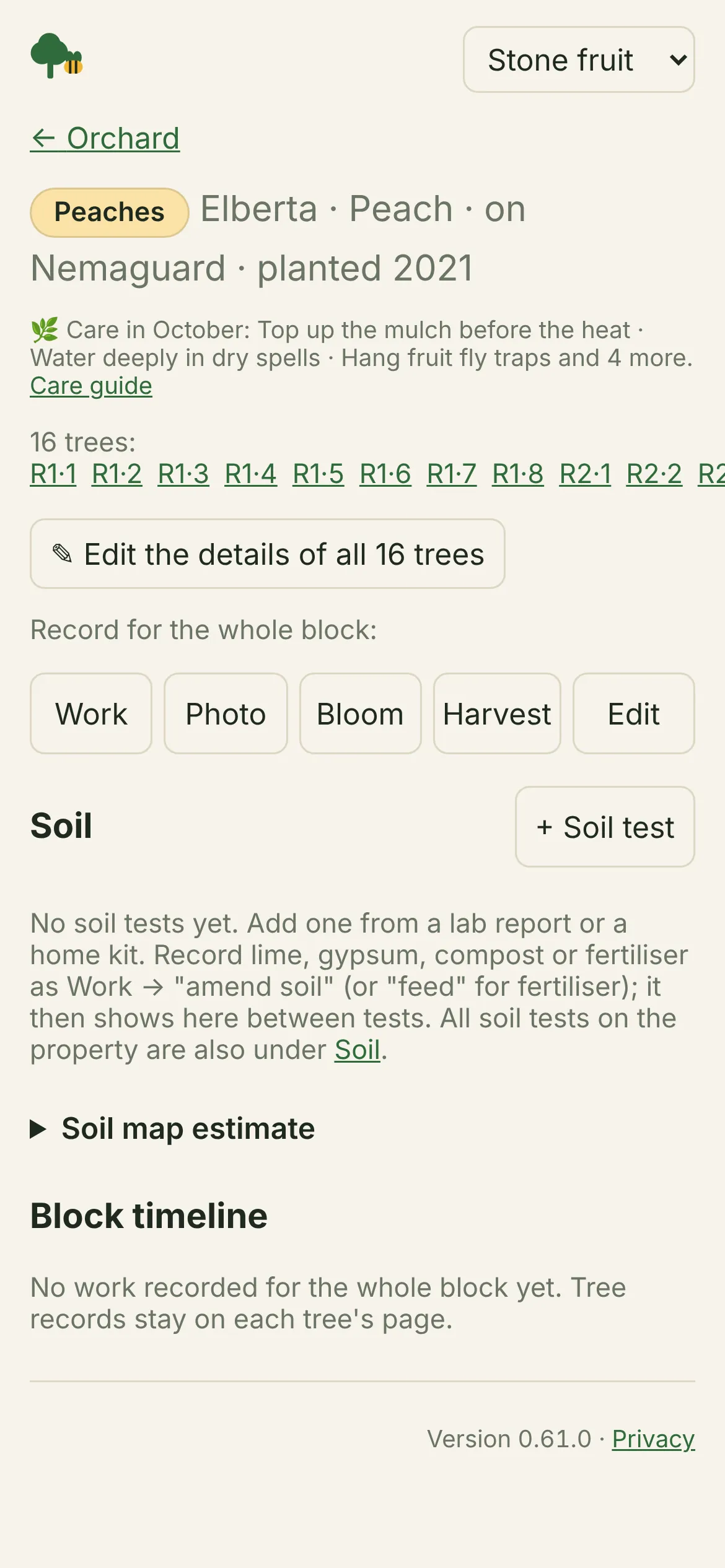
Trees n Bees suggests organic care for the crops on your property, month by month: sprays, feeding, compost and mulch, fruit fly and codling moth traps, pruning, watering and what to check for. It knows which crops you grow from your trees and blocks, and any suggestion becomes a job in one tap.

Organic options only
Every suggestion uses organic methods: copper and lime sulphur, wettable sulphur, horticultural and plant-based oils, codling moth virus, kaolin clay, protein baits with spinosad, compost, manure, blood and bone, seaweed, traps, nets and good hygiene. Products are named by what they are, not by brand.
Always read and follow the label. If you are certified organic, check each product with your certifier before you use it.
What it covers
- Spray: leaf curl and shothole at leaf fall and bud swell, black spot and powdery mildew in spring, winter oil for scale, oils for citrus pests, copper for downy mildew, blight and peacock spot.
- Feed: when and what to feed each crop, from hungry citrus to blueberries that need acid soil.
- Compost and mulch: compost in late winter, mulch before the heat, a compost heap from leaves and prunings, and cover crops between the rows.
- Traps and baits: fruit fly traps from early spring and baiting before the fruit colours, codling moth traps and cardboard bands.
- Prune and thin, water, check and protect: when to prune each crop, thinning, deep watering in dry spells, picking up fallen fruit, netting, and the pests to look for.
For the crops you grow
The guide covers about 40 fruit and nut crops, from apples, stone fruit and citrus to avocados, olives, grapes, figs, macadamias and blueberries. It shows the care for the species on your trees and blocks, or pick any crop to see its year. Step through the months to plan ahead, or show only sprays, only feeding and so on.
From suggestion to job
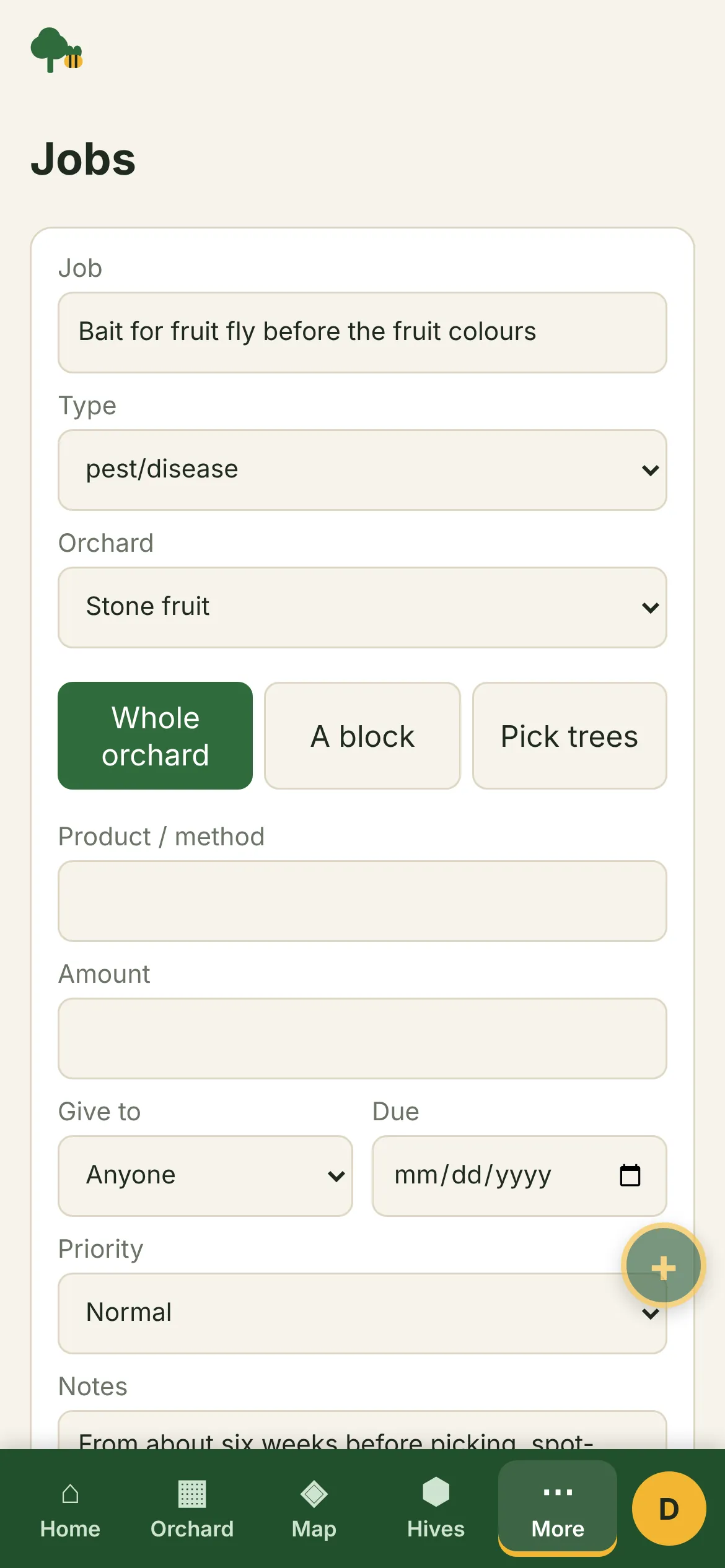
Owners and editors tap "Make a job" and the job is filled in with the task, the type of work and the how-to in its notes. Choose the block or trees, give it to someone and set a due date. When it's ticked done it goes into the work log, and a spray carries its spray diary details. More on jobs for your team →
A rough guide
The months suit temperate southern Australia. Warm districts run a few weeks earlier, fruit fly is about all year in the tropics, and cold districts run later. For a property north of the equator the months move six on. Your nursery and local growers know your district best, and your own records show what your trees did last year.
Using the care guide
- Set the species on your trees or blocks (it may already be there).
- Open Care guide in the Orchard menu: it starts at this month.
- Read what's due, step to next month to plan ahead, and filter by kind of care.
- Tap "Make a job" for anything you want done, and give it to someone.
Planned for coming seasons
Timing for your district
Care months set from your own climate (subtropical, temperate or cold), and from the bloom dates you record.
Questions? See common questions, or the home page for everything Trees n Bees does.