
Fertilising fruit trees: when and how to feed
When and how to fertilise fruit trees: soil pH, compost, mulch, the right time of year to feed, and what yellow or pale leaves can tell you.
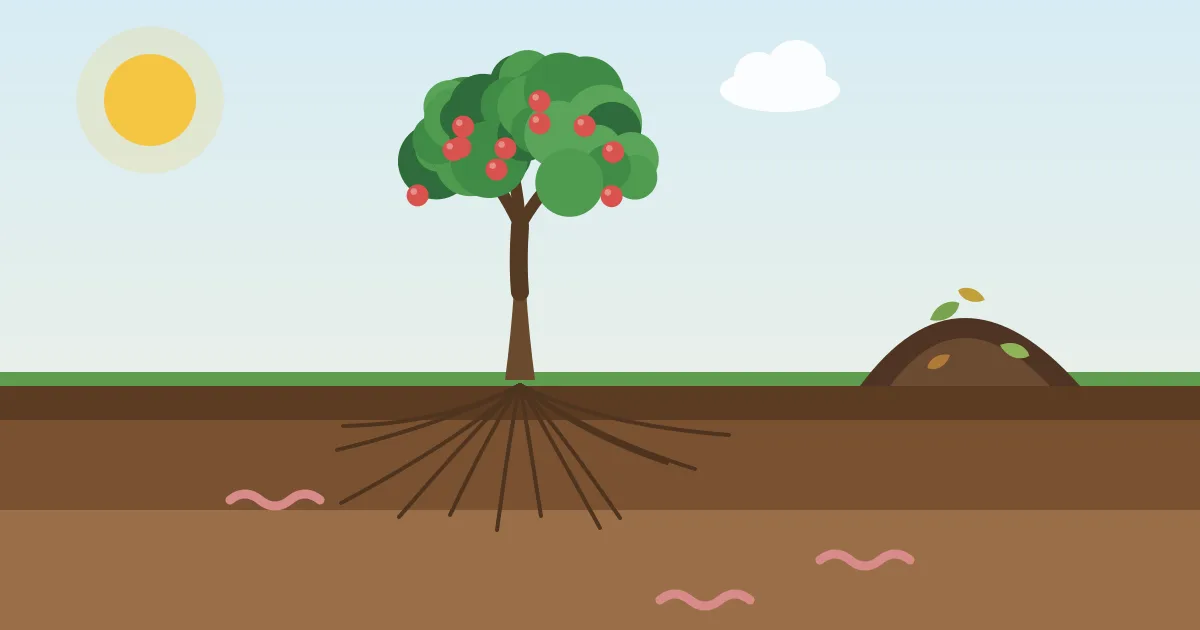
Fruit trees are long-lived, and the best feeding program starts with the soil rather than a bag. Living soil full of organic matter holds water and nutrients and releases them steadily to the roots.
Start with a soil test
A basic soil test tells you the pH and the main nutrient levels. Most fruit trees prefer a pH of roughly 6.0 to 7.0. Citrus and stone fruit grow poorly in very acid soil; blueberries are the exception and like it acid. Lime or dolomite raises pH slowly; sulphur lowers it. Make changes over a season or two, not all at once.
Compost and mulch
Spread a few centimetres of compost or well-rotted manure under the canopy each year, then mulch over the top. This feeds soil life, builds structure and supplies a broad mix of nutrients slowly.
When to feed
- Late winter to early spring: the main feed, as trees wake up and push new leaves and flowers.
- Summer: a light top-up for heavy croppers and citrus, which are hungry feeders.
- After harvest: a small feed helps deciduous trees build reserves and buds for next year.
- Not in late autumn or winter: soft new growth late in the season is easily damaged by frost, and dormant roots take up little.
Little and often
Spread fertiliser evenly under and just beyond the canopy, not in a pile against the trunk, and water it in. Two or three smaller feeds beat one large dose, which can burn roots or wash away. Too much nitrogen gives lots of leafy growth and fewer, softer fruit that pests love.
Reading the leaves
- Pale or yellow older leaves: often a sign of low nitrogen.
- Yellow between green veins on new leaves: often iron or manganese, common in alkaline soils.
- Yellow blotches between veins on older citrus leaves: often magnesium.
- Scorched leaf edges: can be low potassium, but also salt, wind or dry stress.
Leaf symptoms overlap, so treat these as clues, and confirm with a soil or leaf test before spending money on fixes.
Record each feed with what you used and how much, so you can compare it with the crop at harvest time. In Trees n Bees, soil tests of the same spot line up year on year with the lime, compost or fertiliser added in between, so you can see whether it is working, and the care guide suggests when to feed each crop you grow.