How to prune fruit trees: the basics
How to prune fruit trees: the parts of a tree, the two basic cuts, when to prune in winter or summer, keeping trees small, and how each fruit is pruned.
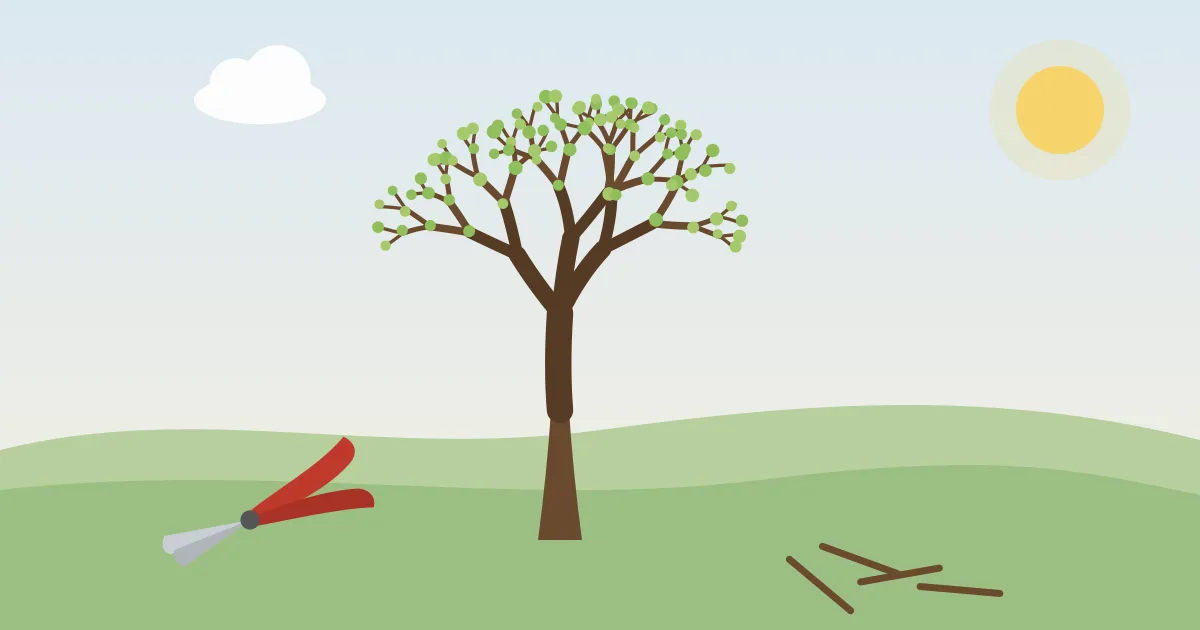
Pruning can feel daunting, but the aims are simple: a strong framework, an open canopy that lets in light and air, fruit you can reach, and the removal of dead, damaged or diseased wood.
Know the parts of your tree
Before you cut, learn to name what you are looking at:
- Trunk and scaffold branches: the main framework, usually three to five strong branches spread evenly around the trunk. These are kept for the life of the tree.
- Leader: the main upright shoot at the top of the trunk or the tip of each scaffold.
- Laterals: side branches growing off the scaffolds, where much of the fruit is carried.
- Spurs: short, stubby twigs with fat fruit buds, common on apples, pears, plums and apricots. Leave them be.
- Water shoots: fast, straight shoots growing upright from branches, usually unfruitful. Remove most of them.
- Suckers: shoots coming up from the rootstock below the graft. Always remove these, as they are not your chosen variety.
Fruit buds are generally plumper and rounder than the slim, pointed leaf buds. Learning to tell them apart in winter helps you see how much fruit you are leaving.
The two basic cuts
- Heading cut: shortening a branch back to a bud. This encourages several new shoots below the cut and makes the tree bushier.
- Thinning cut: removing a whole branch back to where it joins another branch or the trunk. This opens the tree up without causing a burst of regrowth.
Cut just above an outward-facing bud, on a slight angle, so new growth heads out rather than into the middle of the tree. When removing a branch, cut just outside the collar (the slight swelling where it joins), and don't leave stubs.
When to prune
- Winter pruning (while deciduous trees are dormant) encourages vigorous regrowth in spring. Good for shaping young trees and renewing old ones.
- Summer pruning (after harvest or in late summer) slows growth and helps keep trees small. It also lets wounds heal quickly in dry weather.
Apricots and cherries are best pruned in late summer or early autumn in dry weather, as winter cuts invite fungal and bacterial disease in these trees. The Trees n Bees care guide shows when each crop you grow is due for pruning.
Know where your fruit grows
- Peaches and nectarines fruit on last season's growth, so prune fairly hard each year to keep new wood coming. An open vase shape suits them.
- Apples and pears fruit mainly on short, stubby spurs that last for years, so prune lightly and protect the spurs.
- Plums and apricots fruit on spurs and one-year wood. Moderate pruning.
- Citrus need little pruning beyond removing dead wood, crossing branches and low skirts that touch the ground.
- Figs can be pruned hard in winter to keep them a manageable size.
Keep trees at picking height
A tree you can reach from the ground is easier to prune, net, thin and pick, and less fruit is lost to birds. Choose a dwarfing rootstock where you can, decide on a height when the tree is young, and each summer cut back the tallest upright growth to an outward-facing branch at that height. Summer cuts slow the tree down; winter cuts make it grow back harder.
Good habits
- Use sharp, clean secateurs and saws. Wipe blades with alcohol between trees if disease is about.
- Remove the three Ds first: dead, damaged and diseased wood.
- Then remove crossing or rubbing branches and strong upright water shoots.
- Step back often. It is easier to take more off than to put it back.
- As a rule, don't remove more than about a third of the canopy in one year.
Take a photo before and after you prune. Next year you will see exactly how each tree responded. In Trees n Bees each tree keeps a photo strip through the seasons, and bulk logging records a morning's pruning on a whole row or block in a few taps.