Netting fruit trees without harming wildlife
How to net fruit trees against birds, possums and flying foxes without harming wildlife: the right mesh, frames, timing and daily checks.
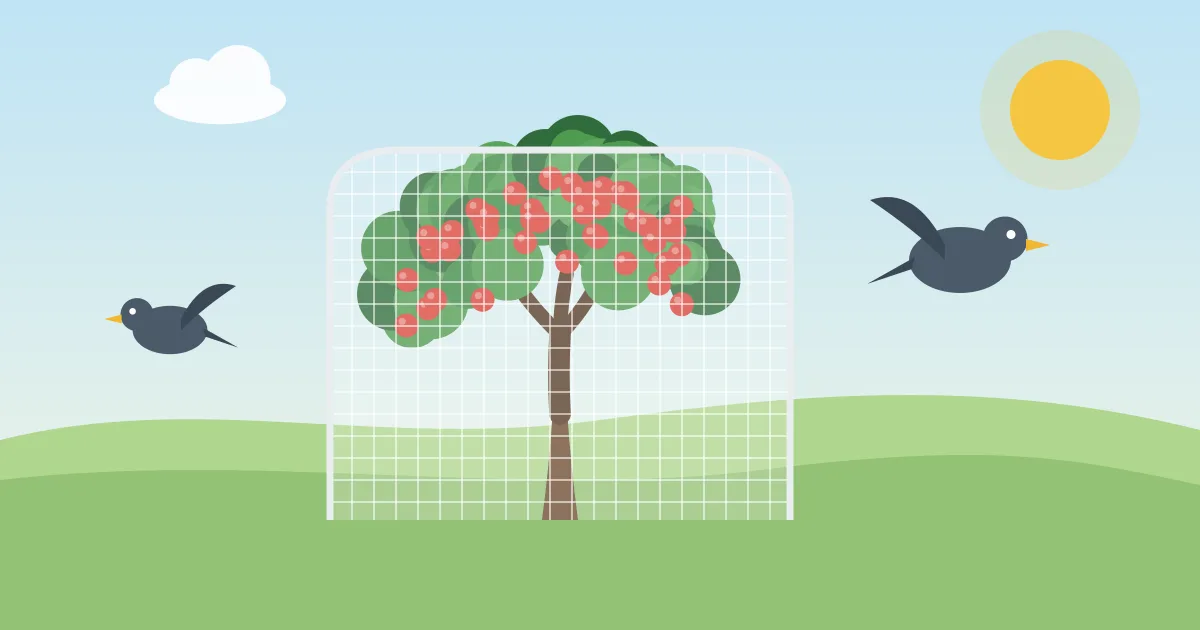
Birds, possums and flying foxes can strip a ripening tree in a night or two. Netting is the most reliable way to protect the crop, but the wrong net, put up the wrong way, can trap and injure animals. Done well, netting protects both your fruit and the wildlife.
Choose a wildlife-friendly net
The mesh size matters most. Animals push their heads and wings through wide mesh and get caught. Choose netting with holes 5 mm or smaller when stretched. You should not be able to poke a finger through it. Some states, Victoria among them, require this for backyard fruit netting, and it is good practice everywhere.
- White or light-coloured netting is easier for animals to see than black.
- Knitted, tight-weave netting is stronger and lasts longer than thin monofilament.
- Fine fruit fly netting keeps out birds, possums and fruit fly together.
Frame it, don't wrap it
Netting thrown straight over a tree sags, lets animals land on it and reach the fruit through it, and tangles in the branches. A simple frame keeps the net clear of the canopy.
- Use timber or steel posts with poly pipe hoops, or a ready-made netting frame.
- Leave a gap of at least 20 to 30 cm between net and fruit.
- Pull the net taut, so it doesn't flap or form loose pockets.
- Close it right down to the ground with pegs, bricks or a buried edge, so animals can't crawl under.
Small trees can be netted with drawstring bags that pull closed around the trunk. Individual fruit bags work well for a few bunches.
Timing
Put nets on once fruit has set and before it starts to colour. Netting at full blossom stops bees reaching the flowers, so wait until petal fall. Take nets off soon after harvest, so they aren't left as a hazard for months.
Check every day
Walk around netted trees each morning. If an animal is caught, don't try to cut it free if it is badly tangled or injured. Cover it with a towel to calm it, and call a local wildlife rescue group or vet. Flying foxes can carry disease, so never handle them yourself.
Keep trees small
Netting is far easier on trees kept to 2 or 3 metres. Dwarfing rootstocks and summer pruning make a big difference here; see summer pruning to keep fruit trees small.
Netting checklist
- Mesh 5 mm or less, light coloured
- On a frame, clear of the fruit
- Taut and closed at the base
- On after petal fall, before colouring
- Checked daily, off after harvest
Netting a whole block? In Trees n Bees, give the job to someone on your team with a due date, and the block's record shows when it was netted. Next season you'll know how long before harvest you need to start.